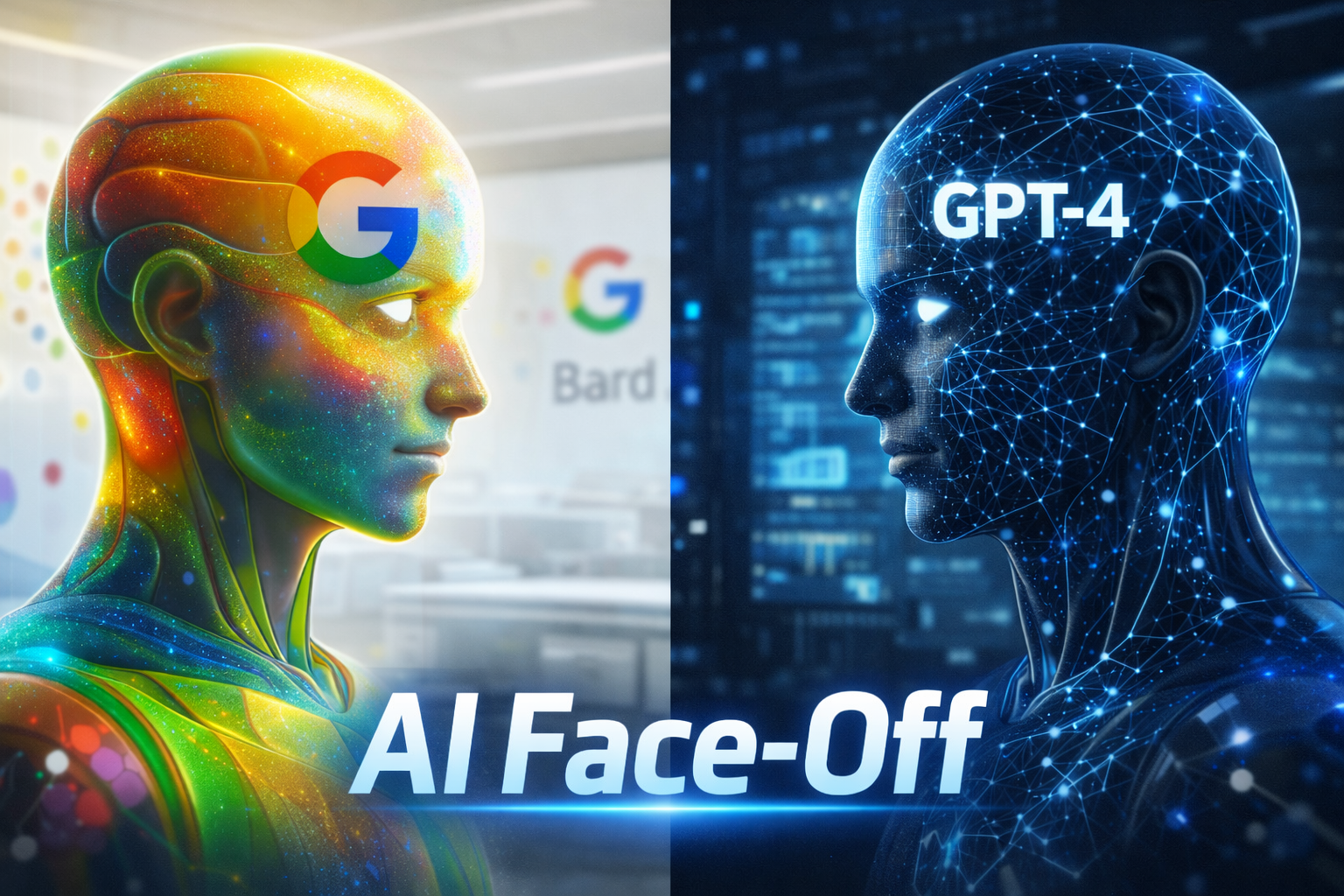
The tech world is buzzing again, and this time, it's about Google. Over the past 48 hours, Google has officially launched Bard, its latest AI-powered chatbot designed to revolutionize how we interact with search engines and digital assistants. This move isn't just about catching up to competitors like OpenAI but about redefining the AI landscape itself. As someone deeply involved in AI and market trends, I see Bard as a pivotal step, with implications far beyond tech giants.
Google's announcement came with much anticipation. For years, they've been quietly advancing their language models, but Bard marks their boldest leap into conversational AI. The tool is built on LaMDA (Language Model for Dialogue Applications), which Google has refined over the past few years. Now, it's being unleashed to the public, promising more natural, context-aware, and reliable conversations.
What makes Bard different? Firstly, its integration with Google's vast search infrastructure. Unlike previous chatbots that operated somewhat separately, Bard is designed to augment search results with rich, conversational insights. Imagine asking Google a complex question and getting an answer that feels like talking to a knowledgeable human. This is a game-changer for consumers and businesses alike.
The impact on the AI market is significant. Google, with its massive user base and data assets, has a competitive advantage. Bard's capabilities could accelerate the adoption of conversational AI across various sectors—customer service, education, healthcare, and more. It pushes the boundaries of what language models can do, moving from simple information retrieval to dynamic, nuanced dialogues.
From a technical perspective, Bard’s architecture leverages Google's vast data centers and advanced machine learning infrastructure. It employs transformer-based models similar to GPT-4 but optimized for dialogue. The training involved billions of parameters, with continuous learning to improve accuracy and safety. Google has also focused heavily on safety and bias mitigation, knowing the potential risks of deploying powerful AI in public spaces.
Google's roadmap indicates that Bard will evolve rapidly. Expect iterative improvements, deeper integrations with other Google services, and possibly, new features like multimodal inputs—images, voice, and text combined. This could enable a more seamless, human-like interaction experience.
For businesses, Bard offers a new way to engage customers. Imagine chatbots that understand context better, provide more personalized responses, and handle complex queries efficiently. For search engines, this means a shift from keyword matching to understanding intent. As a product owner, I see immense opportunities here—streamlining workflows, enhancing user engagement, and gaining competitive edges.
But with opportunity comes risk. The rapid deployment of such powerful AI raises questions about misinformation, privacy, and ethical use. Google has emphasized safety features, but the landscape is still evolving. The risk of biased responses or misuse remains, requiring careful monitoring and regulation.
In the Gulf, including Oman, this development is particularly relevant. As governments and businesses strive to modernize, AI tools like Bard could accelerate digital transformation. Local companies could leverage it to improve customer support, automate services, or develop new AI-driven products tailored to regional needs.
For example, a telecom company in Oman could deploy Bard-powered chat support, reducing operational costs and enhancing customer satisfaction. Similarly, educational institutions might use it to develop intelligent tutoring systems in Arabic, catering to regional languages and dialects.
Looking ahead, I predict that Bard will be a catalyst for more AI-driven innovation in the Gulf. The region's investments in technology, combined with Google’s advancements, could lead to a vibrant ecosystem of AI startups and solutions tailored for local markets.
However, the rapid pace of AI development also presents challenges. Regulatory frameworks, talent acquisition, and infrastructure development will be critical. The risk of over-reliance on a few tech giants could stifle local innovation if not managed carefully.
To navigate this landscape, organizations should prioritize understanding AI capabilities, investing in talent, and establishing ethical guidelines. Experimenting with Bard for internal use, developing regional language models, and collaborating with local universities could foster a more balanced ecosystem.
Many questions remain. How will Bard handle regional dialects? What safeguards will Google implement against misinformation? How will this influence global AI standards? These are areas to watch closely.
In conclusion, Google's Bard AI launch marks a significant milestone. It signals the beginning of a new chapter where conversational AI becomes more integrated into our daily lives and business operations. For me, as a product owner and market observer, this is an exciting but cautious time. The opportunities are vast, but so are the risks.
The key is staying informed, experimenting responsibly, and advocating for ethical AI development. The Gulf region, including Oman, stands to benefit immensely if we harness these tools wisely. Now is the time to embrace AI innovation, build local expertise, and shape a future where technology serves our unique needs and aspirations.