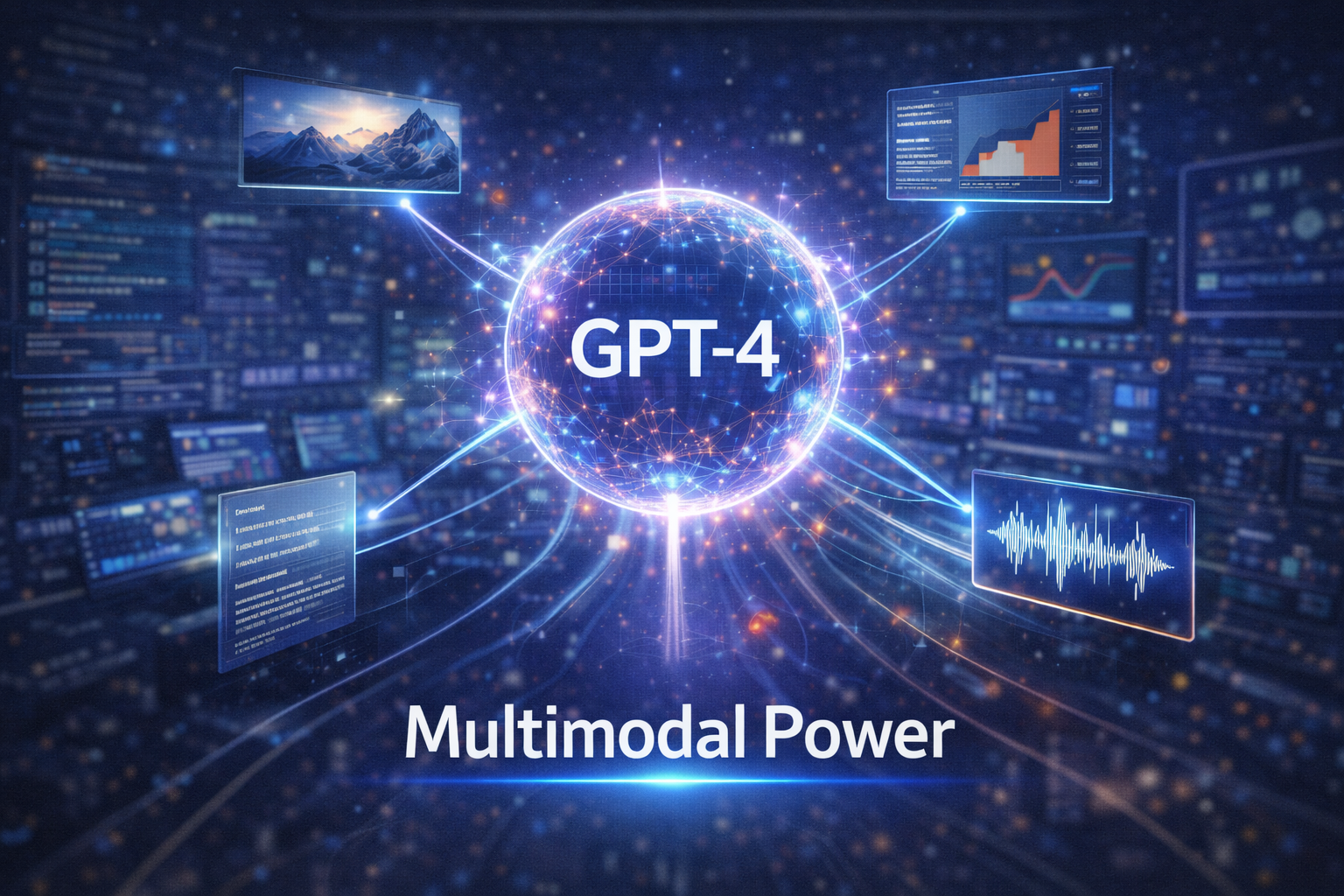
The last 48 hours have marked a significant milestone in artificial intelligence development. OpenAI announced the full rollout of GPT-4's multimodal capabilities, an advancement that extends the model's abilities beyond text to include visual inputs. This shift is not just a technical upgrade; it's a paradigm change that will reshape how industries leverage AI, how products are built, and how markets evolve.
For years, AI models have specialized in either language or vision. Now, GPT-4 seamlessly integrates both, opening doors to applications that were previously unimaginable. Imagine a customer service chatbot that not only understands your query but also interprets images you send, or a design tool that generates concepts based on sketches and descriptions simultaneously. These use cases are becoming reality.
The impact of this development is profound. Companies across sectors—healthcare, finance, retail, manufacturing—are already exploring multimodal AI to enhance operations, improve customer engagement, and innovate new services. The Gulf region, with its ambitious digital transformation goals, stands to benefit immensely. Local startups and tech giants alike are investing in AI research, eager to capitalize on GPT-4's new features.
Technically, GPT-4's multimodal capabilities rely on an advanced neural network architecture that processes multiple data streams simultaneously. According to reports, this involves billions of parameters trained on diverse datasets, blending visual recognition and natural language understanding. The result is an AI that can interpret complex scenarios, providing more contextually accurate responses.
However, this breakthrough isn't without risks. The increased capability heightens concerns around misuse, deepfakes, and data privacy. Ensuring ethical deployment and safety remains paramount. There's also a prediction that as these models grow more powerful, the competition among AI giants will intensify, leading to rapid innovation but also potential monopolistic behaviors.
For businesses, the opportunity is clear. Adopting multimodal AI can lead to significant efficiencies, new revenue streams, and differentiated customer experiences. Yet, the challenge lies in integrating these complex systems into existing workflows. Companies need to invest in talent, infrastructure, and ethical frameworks.
In Oman and the Gulf, the adoption of GPT-4's multimodal features could accelerate digital transformation efforts. For example, telemedicine companies can use visual inputs for diagnostics, while e-commerce platforms can leverage AI for personalized shopping experiences combining images and text. Government agencies might deploy multimodal AI for smarter urban planning or security systems.
What practical steps should organizations take? First, invest in talent—AI specialists who understand multimodal systems. Second, upgrade infrastructure—cloud computing resources capable of supporting large models. Third, experiment with pilot projects to understand application potential. Fourth, establish ethical guidelines to prevent misuse. And finally, foster partnerships with AI research firms and academia.
In the Gulf, where digital innovation is a strategic priority, embracing multimodal AI could provide a competitive edge. Local startups like Careem and Oman Data Park are already exploring AI-driven solutions. By integrating GPT-4's new capabilities, they can enhance service delivery, optimize logistics, and develop smarter data analytics.
Questions naturally arise. How soon will multimodal AI become mainstream? Likely within the next 12-24 months as hardware and software mature. What are the biggest risks? Misinformation, bias, and privacy breaches. How can we mitigate these? Through strict regulation, transparency, and robust safety protocols.
Looking ahead, the trajectory is clear. GPT-4's multimodal capabilities are just the beginning. As models evolve, so will their integration into daily business and life. The opportunity lies in early adoption, responsible deployment, and continuous innovation.
For me, as a product owner and tech enthusiast, this is an exciting time. The potential to build smarter, more intuitive systems is enormous. But it requires vigilance, ethics, and a clear vision. The future of AI is multimodal—and it's happening now.